
Tub type and size
Alcove, drop-in, undermount, or freestanding. Each affects the plumbing, the deck, and the floor area required.
Bathtub replacement in Jacksonville, FL
Removing a worn tub and installing a new one properly means rebuilding what surrounds it — substrate, waterproofing, tile, and the plumbing behind the wall.
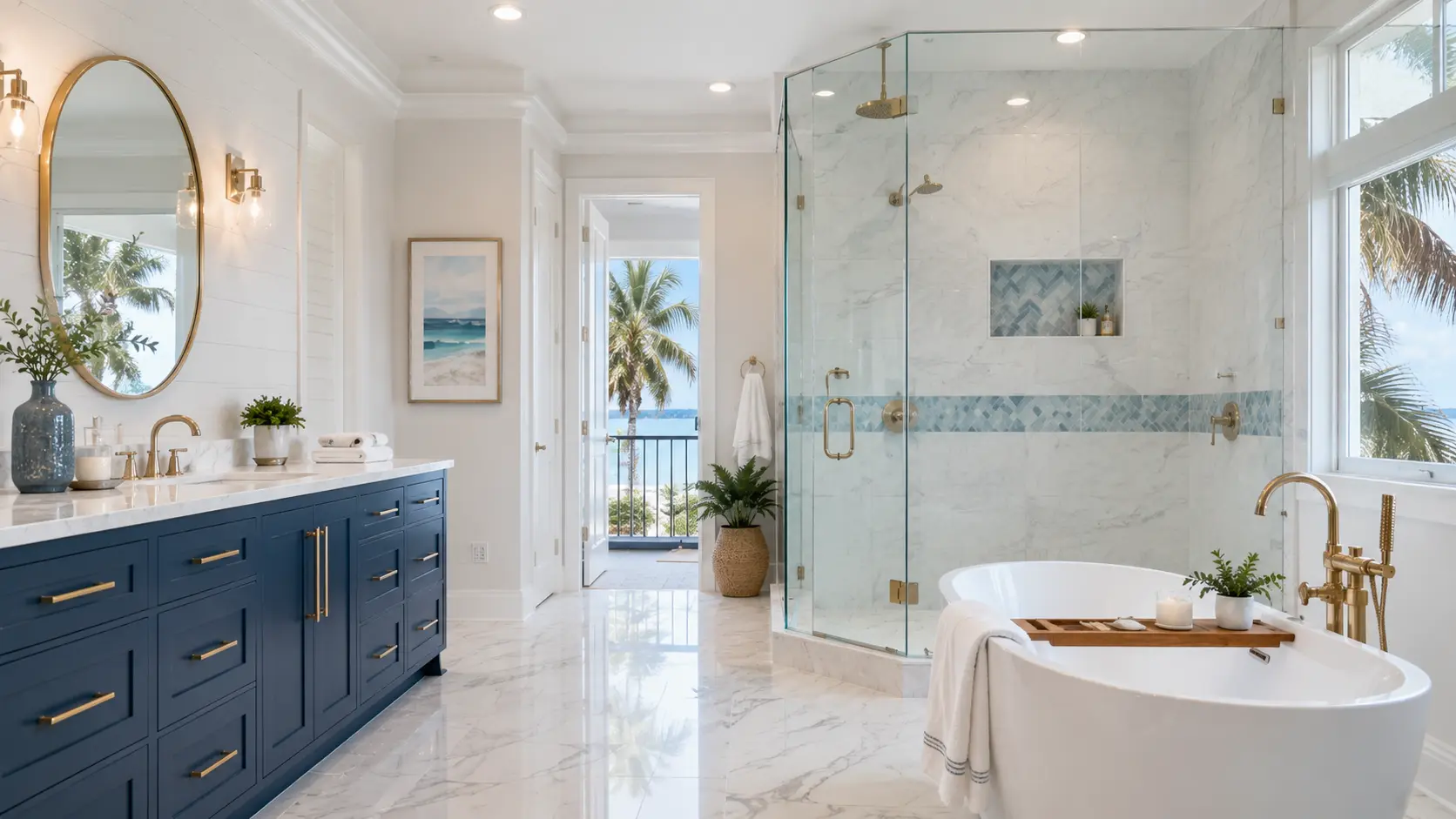
Bathtub replacement is the right project when you want to keep a tub but the current one has aged out: chipped or cracked, permanently stained, an outdated color, or paired with a fiberglass surround that has crazed and yellowed. It is also common in hall and guest bathrooms where a family wants to retain bathing capability rather than convert to a shower.
If nobody in the household actually uses the tub, consider a tub to shower conversion instead. And if the tub is one of several tired elements in the room, a full bathroom remodel may cost less overall than addressing each piece separately.
The most common failure point is not the tub itself but the joint where it meets the wall. Caulk there is repeatedly stressed by the tub flexing under load, and once it opens, water reaches the substrate. Over time that produces soft flooring at the apron, staining on the adjoining wall, and eventually damaged framing. Replacing the tub and rebuilding the surround properly ends the cycle.
Comfort matters too. Older builder tubs are shallow and short, with sloped ends that make soaking uncomfortable. Modern tubs are available in deeper profiles within the same footprint, which is a meaningful upgrade without changing the room's layout.
An alcove tub is the standard three-wall installation and the most economical to install and maintain. A drop-in tub sits inside a framed and tiled deck, which looks custom and offers ledge space but takes more floor area. A freestanding tub is a sculptural centerpiece that needs clearance around it and its own filler solution. Undermount installations combine a stone or tiled deck with a clean interior edge.
Whichever you choose, the surround is a decision in its own right. Tile to the ceiling makes a small bathroom feel taller and protects more wall area than a standard partial-height surround. A recessed niche in the wet wall gives you somewhere to put things that is not the tub ledge.
Every bathroom is different. Send a few details about the room and we will help you shape a scope that fits it.
Details that matter
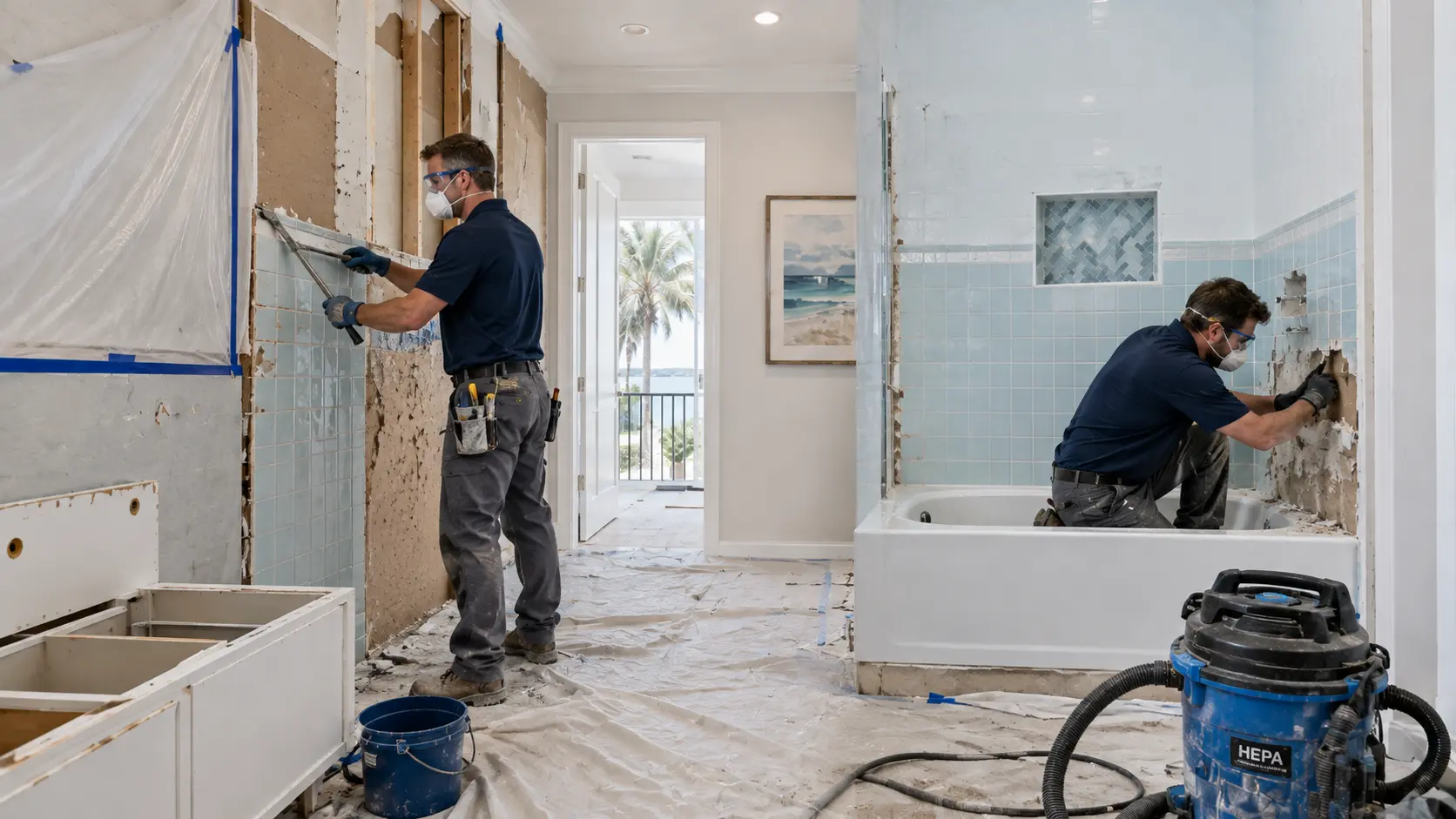
The old tub and surround are removed under containment. With the alcove open, the subfloor, framing, and supply and drain lines are inspected. Older homes commonly need some framing repair at the apron and occasionally in the wet wall; that work is documented and priced before it proceeds.
The new tub must be set level and fully supported. Acrylic and steel tubs typically need a mortar bed or manufacturer-specified support under the base so the floor of the tub does not flex — flexing is what breaks the caulk joint and, eventually, the surround. The drain and overflow are connected and tested, framing is squared for tile, and blocking is added where a grab bar or shower rod will land.
Backer board replaces any drywall in the wet zone, and the wall assembly receives a waterproofing treatment appropriate to the system being used, with the tub flange integrated correctly so water is directed into the tub rather than behind it. Tile is then set with planned layout, and the tub-to-tile joint is finished in flexible sealant rather than grout, because that joint has to move.
A tub-shower combination generates as much steam as any shower, so fan sizing and exterior ducting are reviewed while walls are open. Afterward, maintenance is minimal: clean with neutral products, avoid abrasives on acrylic, and renew the flexible caulk joint at the tub deck every few years before it opens.
Many homes in Mandarin and Baymeadows still carry original builder-grade tubs from the 1970s through the 1990s, often with fiberglass surrounds that have reached the end of their life. In newer construction around Nocatee, the more common request is replacing an oversized garden tub with something that suits how the room is actually used — sometimes a smaller freestanding soaker with a larger shower alongside it.
Typical sequence
Confirm alcove dimensions, floor structure, drain position, and the tub that fits the space.
Tub, filler and valve, tile, niche placement, and hardware finishes.
Old tub and surround removed; framing, subfloor, and plumbing evaluated and reported.
Plumbing adjusted, blocking installed, and the new tub set level and fully supported.
Backer board, waterproofing integrated with the tub flange, then tile and grout.
Fixtures, sealant joints, and final review of the finished installation with you.
Full-room remodeling that reworks layout, storage, finishes, and fixtures from the substrate out.
Rebuilt shower enclosures with modern waterproofing, tile, niches, benches, and glass.
Turn an underused tub alcove into a roomier, easier-to-enter shower without moving the whole bathroom.
Vanity, countertop, sink, and mirror upgrades that add storage and fix awkward heights and clearances.
Established homes along the San Jose Boulevard corridor.
Southside and Deerwood-area homes near the I-95 corridor.
Julington Creek and Durbin-area suburban homes off CR 210.
Newer Town Center, Crosswater, and Twenty Mile neighborhoods.
View every service area or read the Jacksonville cost guide.
Questions
Reglazing can buy a few years on a tub that is structurally sound but stained or dull. It does nothing for a cracked basin, a failed surround, or damage behind the walls, and refinished surfaces need careful cleaning. When the surround is being replaced anyway, full replacement usually makes more sense.
A straightforward alcove tub with a tiled surround typically runs one to two weeks including waterproofing cure, tile, and grout. A freestanding tub with relocated plumbing or a fully tiled deck takes longer.
Sometimes, but they need clearance on all sides and a floor that can carry the filled weight. The filler is also a separate decision — floor-mounted, deck-mounted, or wall-mounted — and each affects the plumbing rough-in.
Acrylic is light, warm to the touch, and the most common choice. Porcelain-enameled steel is more rigid and holds up well but conducts cold. Cast iron holds heat best and looks superb but is very heavy and may need floor evaluation. Solid-surface freestanding tubs are the premium option.
Usually, yes. Removing a tub disturbs the wall assembly around it, so it is the right time to rebuild the surround properly with backer board, waterproofing, and tile rather than reinstalling a panel kit over questionable substrate.
Water damage at the tub apron and in the wet wall is common on older tubs. We photograph it, show you the condition, and price the repair before proceeding.
Tell us what you want to change and we will help you shape a realistic scope for your home.